
NSW Homeschool Maths Curriculum Guide for Years 1–10
Build a practical NSW homeschool maths program using the current Mathematics K–10 syllabus. This guide explains stages, learning priorities, weekly planning, progress records and sensible next steps for families teaching maths at home.
- Years 1–10
- NSW syllabus aligned
- Practical weekly examples
- Free planning tool

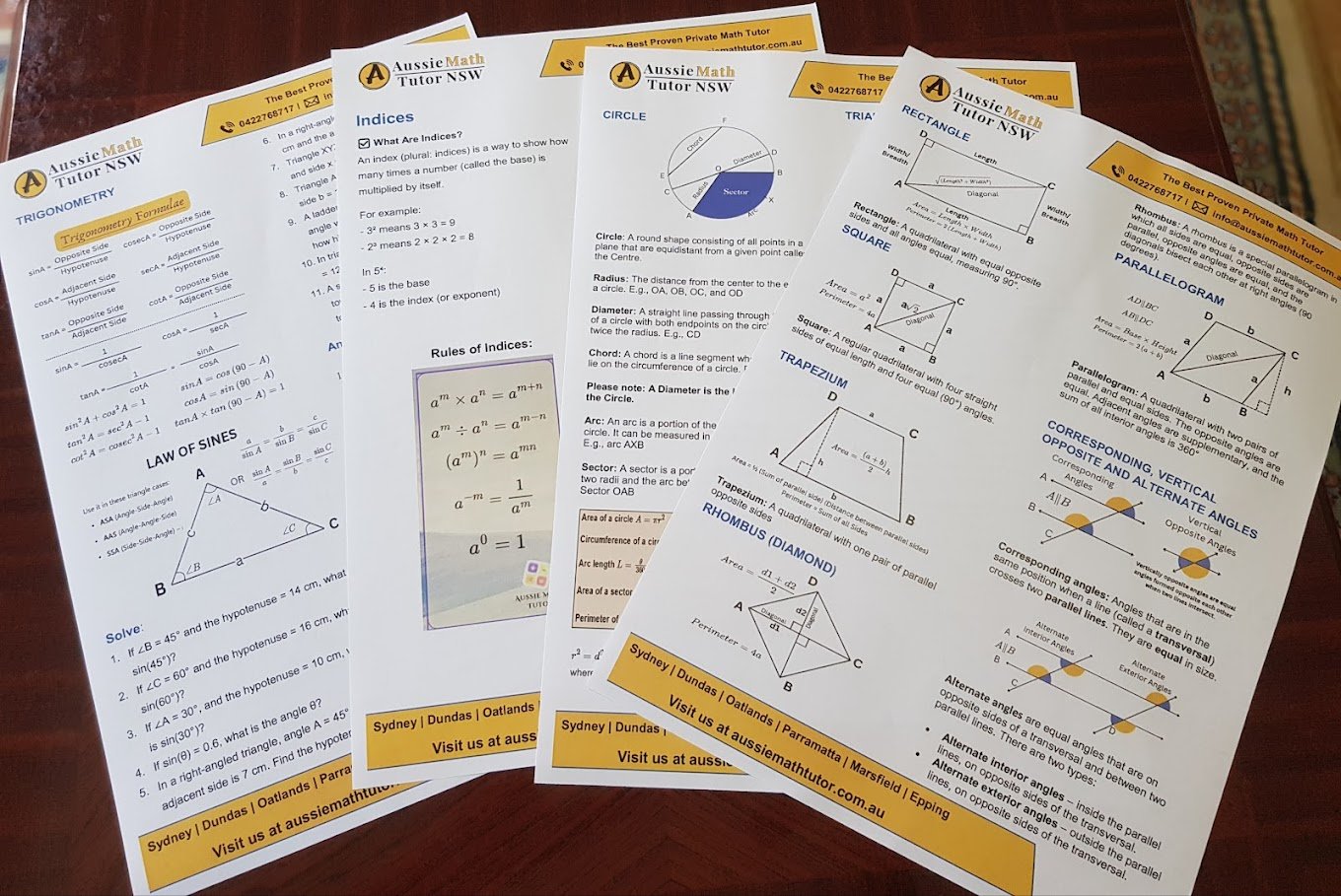
What a NSW homeschool maths program needs to do
In NSW, a home-school educational program must be based on the relevant NESA syllabuses. For Mathematics, that means working from the current Mathematics K–10 Syllabus and selecting suitable outcomes, content and stage statements where they apply.
Newer syllabuses may not include stage statements, so the most reliable approach is to check the current syllabus and use its outcomes, focus areas and content as the planning foundation.
Base learning on the syllabus
Identify the relevant stage, outcomes and content rather than relying only on a commercial workbook.
Make it suitable for the child
Adjust pace, sequence, resources and teaching methods while retaining a clear connection to syllabus learning.
Show implementation and progress
Keep practical evidence that demonstrates what was taught, what the child learned and what needs revision.
Match the school year to the NSW maths stage
Stages usually group two school years together. A child may still need content from an earlier stage or selected extension from a later stage, depending on their demonstrated learning needs.
| Stage | Usual school years | Typical planning emphasis | Useful evidence |
|---|---|---|---|
| Early Stage 1 | Kindergarten | Early number sense, patterns, comparing, measuring, position and mathematical language. | Photos, short observations, practical activities, drawings and simple work samples. |
| Stage 1 | Years 1–2 | Place value, addition and subtraction strategies, early multiplication and division, measurement, shapes and data. | Annotated tasks, oral explanations, mini-checks and dated work samples. |
| Stage 2 | Years 3–4 | Multiplicative thinking, fractions, decimals, measurement, spatial reasoning, data and probability. | Worked examples, investigations, topic reviews and notes about strategy use. |
| Stage 3 | Years 5–6 | Fractions, decimals and percentages, ratios, larger numbers, geometry, data, probability and multi-step problems. | Problem-solving tasks, projects, quizzes, corrections and progress summaries. |
| Stage 4 | Years 7–8 | Integers, fractions and percentages, algebra, equations, rates, geometry, measurement, statistics and probability. | Topic assessments, worked solutions, investigations and records of feedback or revision. |
| Stage 5 | Years 9–10 | Core learning plus suitable Path content, including algebra, functions, trigonometry, geometry, statistics and probability. | Extended problems, tests, investigations, reflective corrections and evidence of readiness for future courses. |
What students learn in the NSW maths curriculum
The current syllabus organises mathematical learning across three broad areas. Working mathematically—reasoning, problem-solving, communicating and making connections—is embedded throughout them.
Number and algebra
- Whole numbers and operations
- Fractions, decimals and percentages
- Ratios, rates and financial mathematics
- Patterns, algebra, equations and relationships
Measurement and space
- Length, area, volume, mass and time
- Position, angles and geometrical reasoning
- Two-dimensional and three-dimensional objects
- Scale, similarity and trigonometry in later years
Statistics and probability
- Collecting and representing data
- Interpreting graphs and statistical displays
- Chance, likelihood and probability
- Statistical investigation and critical interpretation
Working mathematically should appear throughout the program
Do not plan maths as a list of isolated procedures. Include opportunities to explain thinking, compare methods, solve unfamiliar problems, estimate, check whether an answer is reasonable and apply learning in practical contexts.
Assessment should guide the next teaching decision
Short diagnostic checks, observation and work samples can show whether a child is ready to move forward, needs more practice or needs an earlier prerequisite taught differently.
Learn how to identify maths learning gaps →Seven steps for building a homeschool maths plan
A useful program begins with evidence of current understanding and turns broad syllabus goals into teachable, reviewable steps.
Start with educational history and current evidence
Review previous reports, work samples, assessments, parent observations and the child’s confidence with everyday maths.
Identify the relevant stage and prerequisite skills
Use the child’s school year as a starting point, then check earlier skills that the new learning depends on.
Select a small number of term priorities
Choose high-value focus areas instead of attempting to cover every topic at once. Include one consolidation goal and one progression goal.
Break each priority into teachable steps
Move from concrete and visual understanding to written methods, fluency, reasoning and applied problem-solving.
Plan a flexible weekly rhythm
Combine explicit teaching, guided practice, independent work, practical application and review without copying a school timetable.
Collect evidence while learning happens
Date selected work, add short annotations and record what support was needed, what improved and what should happen next.
Review and adjust the program
Revisit priorities regularly. Slow down, revise, change resources or extend learning when the evidence indicates it is appropriate.
Build a sample weekly homeschool maths plan
Select a year group, current priority and available lesson time. The tool will create a simple starting structure that you can adapt.
Create your sample plan
Your plan will appear here
Choose the options that best match your current situation, then generate the sample structure.
This tool provides a general planning example, not a complete registered educational program. Confirm syllabus selections and registration requirements using current official NSW guidance.
A flexible rhythm is more useful than recreating school at home
NSW guidance allows families to organise learning in ways that suit the child and family, provided enough time is allocated to cover the curriculum. These examples are starting points rather than compulsory timetables.
Primary example
Shorter sessions with frequent review and practical application
- MondayExplicit teaching and guided examples using objects, diagrams or number lines.
- TuesdayBrief fluency practice and one reasoning question.
- ThursdayNew learning or continued guided practice.
- FridayPractical maths, game, mini-check or reflection.
Secondary example
Longer blocks with explicit instruction, application and review
- MondayTeach a concept, model worked examples and identify prerequisite gaps.
- WednesdayMixed guided and independent practice with feedback.
- FridayProblem-solving, investigation or application task.
- FortnightlyShort review task, corrections and program adjustment.
Adjust the structure without losing the learning goal
A child who becomes overwhelmed may benefit from shorter sessions, predictable routines, fewer questions on a page, visual supports and clear stopping points. A child ready for extension may benefit from deeper problems rather than simply more repetitive questions.
The syllabus goal can remain the same while the teaching method, resource, sequence or amount of content in one session changes.
Read the maths anxiety and additional needs guide →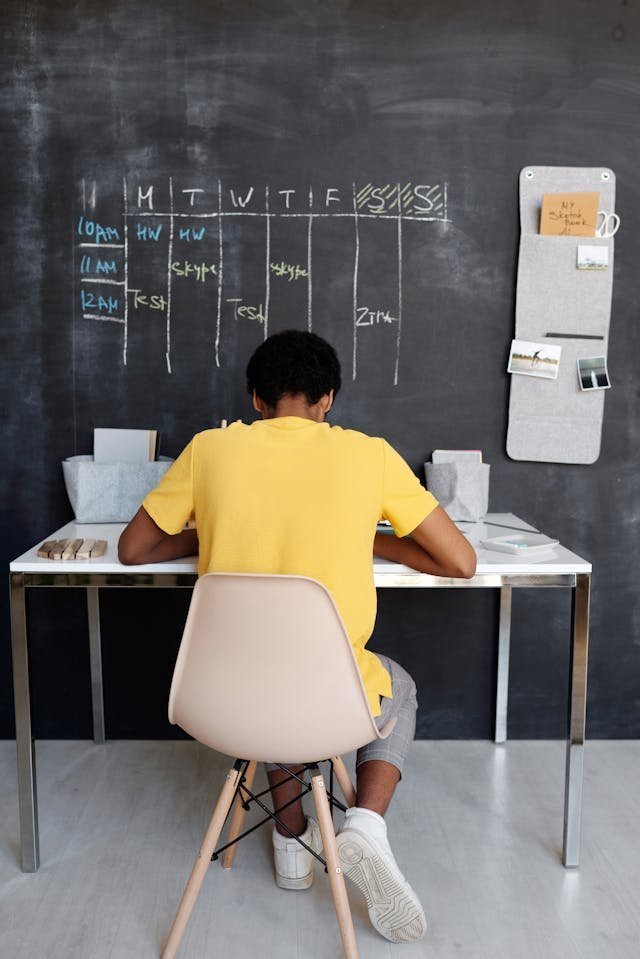
Keep records that show learning—not just completed pages
Record keeping should help you monitor progress, review the educational program and demonstrate how learning has been implemented over time.
Before the activity
- Record the intended learning focus
- Note the syllabus outcome or content reference
- Identify any prerequisite skill being checked
During the activity
- Keep selected work samples or photographs
- Note prompts, adjustments or resources used
- Capture oral explanations where useful
After the activity
- Record what the child demonstrated
- Identify errors or gaps requiring revision
- Write the next teaching step
A simple annotation example
Learning focus: Compare and order fractions with related denominators.
Evidence: Correctly placed five fractions on a number line after one visual prompt.
Next step: Compare fractions with unrelated denominators and explain the chosen strategy.
Useful records may include
- Dated work samples and photographs
- Program annotations and short progress summaries
- Digital tasks, projects and practical activities
- Topic checks, corrections and student reflections
- Notes about resources, adjustments and next steps
Six mistakes that can make homeschool maths harder than it needs to be
Starting from the year-level book only
A textbook may assume prerequisite understanding that the child has not yet developed. Check foundations before increasing difficulty.
Covering content without working mathematically
Correct answers alone do not show whether a student can reason, explain, choose a method or apply learning in a new situation.
Changing resources too quickly
A new book or app may change the appearance of the work without resolving the underlying misconception.
Keeping every worksheet
A smaller collection of annotated evidence is usually more informative than boxes of unreviewed pages.
Waiting too long to check foundations
Difficulty with algebra, percentages or rates may begin with earlier weaknesses in number facts, fractions or place value.
Letting maths become a daily conflict
Repeated distress can reduce participation. Shorter sessions, clearer success criteria and outside support may help reset the learning relationship.
Your child does not need to struggle through every maths topic alone
A maths tutor can help identify a sensible starting point, explicitly teach difficult concepts, provide structured practice and give parents clearer information about progress and next steps.
Aussie Math Tutor NSW provides face-to-face homeschool maths tutoring in Telopea and selected nearby suburbs, including Oatlands, Dundas, Dundas Valley, Rydalmere, Ermington and Carlingford. Online lessons are available across NSW.
- Years 1–10 maths support
- Learning-gap and confidence-focused teaching
- NSW syllabus-aligned lesson planning
- Clear parent feedback and practical next steps

Related homeschool maths guides and support
Use these pages together to identify the child’s current needs, plan suitable learning and decide whether additional support would help.
Homeschool Maths Tutor in Sydney and NSW
Explore personalised face-to-face tutoring near Telopea and online homeschool maths tutoring across NSW.
View tutoring options →Identify Homeschool Maths Learning Gaps
Recognise warning signs, use practical checks and determine where new teaching should begin.
Read the learning-gaps guide →Maths Anxiety and Additional Learning Needs
Use lower-pressure teaching strategies and adapt the learning environment without lowering expectations unnecessarily.
Read the support guide →Check current NSW Government and curriculum guidance
Curriculum and registration information can change. Use the following official sources when preparing or reviewing a home-school educational program.
Frequently asked questions about homeschool maths in NSW
Do NSW homeschool students need to follow the NESA maths syllabus?
Yes. A NSW home-school educational program must be based on the relevant NESA syllabuses. For Years K–10 maths, use the current Mathematics K–10 syllabus and select suitable outcomes and content, plus stage statements where applicable.
Which NSW maths stage matches my child’s school year?
Early Stage 1 generally corresponds to Kindergarten; Stage 1 to Years 1–2; Stage 2 to Years 3–4; Stage 3 to Years 5–6; Stage 4 to Years 7–8; and Stage 5 to Years 9–10.
Can my child work from an earlier maths stage?
A program can address prerequisite learning from an earlier stage when evidence shows it is needed. The plan should still identify the child’s relevant stage and clearly explain how selected learning supports progress.
How many hours of homeschool maths are required each week?
NSW home schooling does not need to copy a school timetable. Parents must be able to show that enough time is allocated to cover the curriculum across the registration period. The appropriate weekly pattern depends on the child’s stage, needs and wider educational program.
Do I need to use a particular maths textbook?
No single commercial textbook is compulsory. Families can choose suitable resources, but the educational program should remain connected to the current NESA syllabus rather than being based only on a workbook sequence.
What homeschool maths records should I keep?
Useful evidence may include dated work samples, photographs, digital tasks, program annotations, assessment results, student reflections and short progress summaries that show what was taught and learned.
How often should I assess homeschool maths progress?
Use ongoing informal assessment during teaching and periodic short reviews. The aim is to identify current understanding, guide the next lesson and monitor progress—not to create constant high-pressure testing.
What should I do when my child has significant maths gaps?
Identify the earliest missing prerequisite, teach it explicitly and check understanding before moving forward. Avoid simply assigning more year-level questions when the underlying concept is not secure.
Can a maths tutor prepare my complete home-school registration program?
A tutor can help assess maths skills, explain syllabus-linked priorities, teach concepts and provide progress information. Parents remain responsible for their complete educational program and should follow current official registration guidance.
Is online homeschool maths tutoring available across NSW?
Yes. Aussie Math Tutor NSW offers online maths tutoring for Years 1–10 across NSW. Face-to-face lessons are available in Telopea and selected nearby suburbs, subject to tutor availability.
Turn the NSW maths syllabus into a plan your child can actually use
A free starting assessment can help identify the child’s current level, important prerequisite gaps and suitable priorities for personalised maths tutoring.
Face-to-face near Telopea and selected nearby suburbs. Online tutoring is available across NSW.