Free NSW Maths Resources for Years 1–10
Explore NSW maths syllabus guides, take free interactive practice tests, study all 31 current maths topic guides and build confidence with free browser-based maths games. Everything is organised here so families can find the right resource quickly.

Choose Your Year: Syllabus Guide + Free Practice Test
Each school year is kept in one compact card. Open the syllabus guide to see the key skills, or go straight to the matching free practice test.
Year 1 Maths
Number bonds, addition, subtraction, measurement, time and shapes.
Year 2 Maths
Place value, operations, fractions, measurement, data and chance.
Year 3 Maths
Multiplication, division, fractions, measurement, geometry and data.
Year 4 Maths
Operations, fractions, decimals, area, perimeter, angles and data.
Year 5 Maths
Fractions, decimals, percentages, volume, probability and number skills.
Year 6 Maths
Fractions, decimals, percentages, algebra, geometry and statistics.
Year 7 Maths
Integers, fractions, algebra, equations, geometry and probability.
Year 8 Maths
Rates, ratios, percentages, indices, linear graphs and Pythagoras.
Year 9 Maths
Indices, surds, algebra, trigonometry, financial maths and probability.
Year 10 Maths
Quadratics, algebra, trigonometry, non-linear graphs, statistics and probability.
NSW stages: Stage 1 = Years 1–2 • Stage 2 = Years 3–4 • Stage 3 = Years 5–6 • Stage 4 = Years 7–8 • Stage 5 = Years 9–10. View the official NSW Mathematics K–10 Syllabus.
All 31 Maths Topics
Every current topic resource is listed on this page. Search by keyword or filter by strand; all 31 topics are visible by default.
Showing all 31 maths topics
Addition Basics
Build number bonds and addition skills.
Learn & PractiseSubtraction Basics
Learn subtraction and find the difference.
Learn & PractiseMultiplication Basics
Learn multiplication and times tables.
Learn & PractiseDivision Basics
Learn sharing, grouping and division skills.
Learn & PractiseFractions
Understand fractions, parts and equivalent fractions.
Learn & PractiseAdding & Subtracting Fractions
Add and subtract fractions step by step.
Learn & PractiseMultiplying & Dividing Fractions
Multiply, divide and simplify fractions.
Learn & PractiseFractions & Decimals
Convert between fractions and decimals.
Learn & PractiseOrdering Decimals
Compare and order decimal numbers.
Learn & PractisePercentages
Calculate percentages and percentage amounts.
Learn & PractiseNegative Numbers
Understand positive and negative numbers.
Learn & PractiseBODMAS
Use the correct order of operations.
Learn & PractiseRatios & Rates
Compare quantities using ratios and rates.
Learn & PractiseSimple Interest
Calculate interest using the simple interest formula.
Learn & PractiseAlgebra Made Easy
Learn variables, expressions and basic algebra.
Learn & PractiseLike Terms
Identify and simplify like terms.
Learn & PractiseAlgebra Substitution
Substitute numbers into algebraic expressions.
Learn & PractiseSimple Linear Equations
Solve one-step and multi-step equations.
Learn & PractiseExpanding & Factorising
Expand brackets and factorise expressions.
Learn & PractiseIndices & Index Laws
Learn powers, indices and index laws.
Learn & PractiseQuadratic Equations
Learn different ways to solve quadratics.
Learn & PractiseParabolas
Understand and graph parabolas.
Learn & PractiseLogarithms
Understand logarithms, rules and equations.
Learn & PractiseNumber Plane & Straight Lines
Learn coordinates, lines and graphs.
Learn & PractiseAdvanced Number Plane
Build stronger coordinate and graphing skills.
Learn & PractiseEssential Geometry Formulae
Find useful area, perimeter and volume formulas.
Learn & PractiseTriangles, Quadrilaterals & Circles
Learn the properties of common 2D shapes.
Learn & Practise2D Spatial Relations
Work with angles, shapes and spatial reasoning.
Learn & PractisePythagoras' Theorem
Find missing sides in right-angled triangles.
Learn & PractiseTrigonometry
Use sine, cosine and tangent.
Learn & PractiseProbability
Understand chance and probability.
Learn & PractisePlay All Our Maths Games
The full current game collection is shown here. The images are displayed at their full aspect ratio inside smaller cards so the artwork is not cropped.
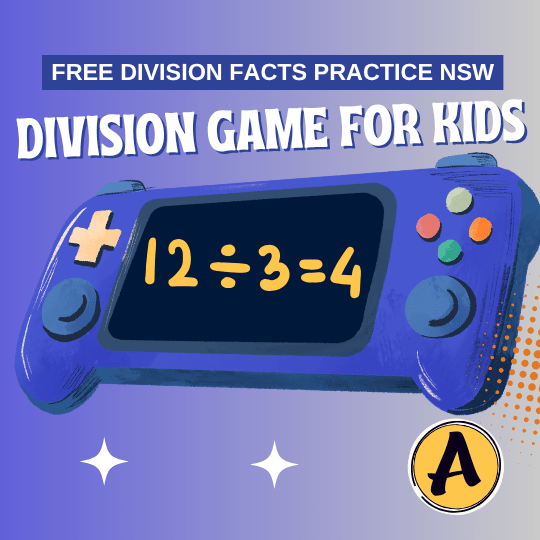 Division
Division Game
Practise division facts, missing numbers and fact families.
Play Free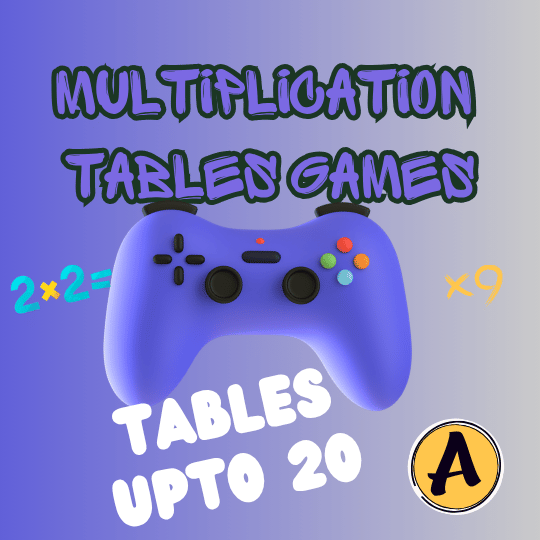 Times Tables
Multiplication Tables
Practise times tables progressively up to 20.
Play Free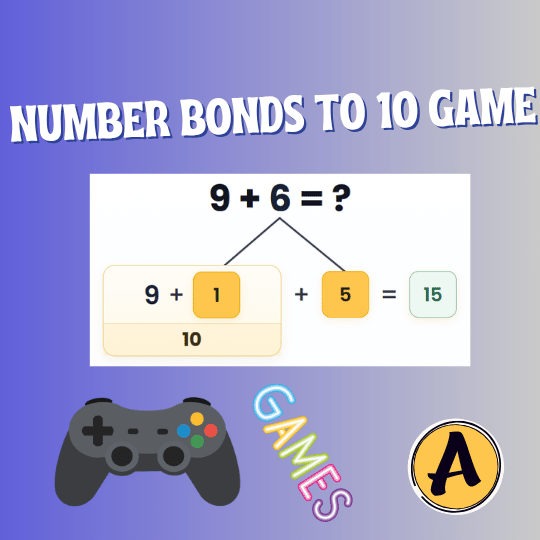 Foundations
Number Bonds to 10
Build fast addition and subtraction recall to 10.
Play Free Mental Maths
Speed Arithmetic
Build confidence with quick-fire mental calculations.
Play Free Memory
Matching Pairs
Combine memory practice with mental maths recall.
Play Free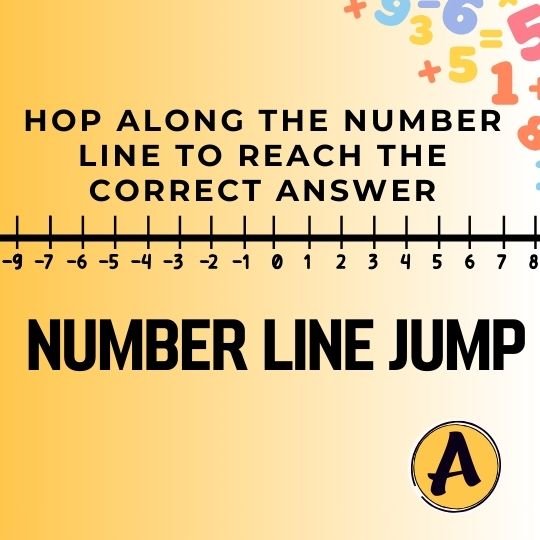 Number Line
Number Line Game
Move along a number line and reach the target.
Play Free Early Years
Kindergarten Maths Games
Simple number games for younger learners.
Play FreeMore Free Maths Support
Use these additional resources when you want NAPLAN-focused numeracy practice or a broader topic-practice collection.
NAPLAN Maths Resources
Find numeracy support for students in Years 3, 5, 7 and 9, including NAPLAN-focused learning and practice resources.
Topic Practice Collection
Prefer topic-by-topic practice rather than a full year-level test? Browse the dedicated practice collection.
Use the Hub in Three Simple Steps
Choose the School Year
Open the syllabus guide or take the matching free test.
Find the Learning Gap
Use the result or schoolwork to identify the topic that needs attention.
Learn, Practise or Play
Open the topic guide, repeat practice, or build fluency through a maths game.
Free NSW Maths Resources
Are the Year 1–10 Free Practice Tests really free?
What is the difference between a syllabus guide and a Free Practice Test?
Are all 31 current maths topic resources shown on this page?
Are these official NSW Government resources?
Where should a student start if maths feels difficult?
Which school years complete NAPLAN?
Can schools, libraries or parent organisations link to this page?
Use the Free Resources First. Get Personalised Help When You Need It.
Explore the tests, syllabus guides, all 31 topic resources and maths games first. If your child still needs support, Aussie Math Tutor NSW offers personalised Years 1–10 maths tutoring and free initial assessments.