Aussie Math Tutor NSW Book Free Assessment

Year 4 Maths Practice Tests NSW | Free Online Questions

Year 4 NSW Math Practice Tests (Stage 2) cover expanded number concepts (place value, fractions), geometry, and real-life applications. Expect easy (basic arithmetic), medium (intermediate arithmetic), and hard (advanced place value, fractions, area, problem-solving) tests.
Year 4 Math Practice Test in Sydney

Table of Contents

Free NSW Stage 2 Maths Practice

Free Year 4 Maths Practice Tests NSW – Foundation, Core & Challenge

Practise Year 4 maths online with four free NSW-focused tests: Foundation, Core, Challenge and Year 5 Readiness. Each test gives instant marking, topic feedback and worked answers so parents and students can see what to practise next.

These tests are designed around the current NSW Mathematics K–10 Stage 2 structure. Stage 2 spans Years 3 and 4, so schools may teach and revisit concepts in a different order. For one longer assessment instead of short practice sets, use our Free Year 4 Maths Test NSW – 60-mark full practice exam.

Choose the right test: start with Core for most Year 4 students. Use Foundation when basic number facts or confidence are weak, Challenge for secure students, and Year 5 Readiness near the end of Year 4.
Year 4 assessment in NSW

What maths tests do students take in Year 4 in Sydney/NSW?

Year 4 students may complete short topic tests, class quizzes, investigations, problem-solving tasks, pre-assessments, post-assessments and broader end-of-unit or end-of-term assessments. There is no single statewide Year 4 maths paper that every NSW student completes.

NSW Mathematics is stage-based. Stage 2 includes Years 3 and 4, and teachers can select and revisit Part A and Part B content according to students’ prior learning, needs and abilities. This means two Year 4 classes can legitimately assess different content at the same point in the year.

The purpose of these free tests is therefore diagnostic practice, not to imitate one particular school's exam. Use the result to identify strengths and gaps, then compare it with what the student's school has actually taught.
Stage 2 coverage

What are the Common Topics for Tests for Year 4 Maths in Sydney/NSW?

Number & Algebra

Place value, numbers to at least tens of thousands, decimals to 2 decimal places, addition, subtraction, multiplication, division, missing values and fractions.

Measurement & Space

Grid maps, metres/centimetres/millimetres, angles, 2D shapes, area, 3D objects and nets, capacity, mass and time.

Statistics & Probability

Collecting and interpreting discrete data, tables, dot plots, column graphs and comparing results of chance experiments.

Working Mathematically

Understanding, fluency, reasoning, problem solving and communicating mathematical thinking across all strands.

For a fuller parent-friendly breakdown, see our Year 4 Maths NSW syllabus guide.

How to choose a level

What to expect from NSW Maths Year 4 Practice Tests?

Foundation / Easy

Short prerequisite and early Stage 2 questions. Best for students who need confidence or a basic skills check.

Core / Medium

The recommended starting point for most Year 4 students. It samples the main Stage 2 strands.

Challenge / Hard

More reading, multi-step thinking and application while still staying centred on Year 4 / Stage 2 skills.

Year 5 Readiness

An optional end-of-Year-4 transition test. It is not a formal Year 4 grade and may feel harder than school work taught earlier in the year.

Interactive practice

Free Year 4 Maths Practice Tests with Answers

Complete one test at a time. Answers remain hidden until the test is submitted. After submission, the page shows the score, topic breakdown and worked explanation for each question.

Foundation / Easy

NSW Maths Year 4 Foundation Practice Test

A gentle diagnostic for prerequisite and early Stage 2 skills. Use this when a student needs confidence or you want to find basic gaps before moving to harder Year 4 work.

12 questions 15–20 minutes Instant marking Worked answers
1. What is the value of the digit 5 in 45,281?
Answer: C. 5,000The 5 is in the thousands place, so its value is 5,000.
2. Which number is the greatest?
Answer: B. 6,9306,930 is greater than 6,903, 6,390 and 6,309.
3. What is 327 + 246?
Answer: B. 573327 + 246 = 573.
4. What is 700 − 358?
Answer: B. 342700 − 358 = 342.
5. What is 6 × 7?
Answer: B. 426 × 7 = 42.
6. What is 48 ÷ 6?
Answer: C. 848 ÷ 6 = 8 because 6 × 8 = 48.
7. What number makes this true? 8 × □ = 64
Answer: C. 88 × 8 = 64.
8. Which fraction is equivalent to 1/2?
Answer: B. 2/42/4 is equivalent to 1/2.
9. Which decimal is the greatest?
Answer: B. 0.520.52 is 52 hundredths, which is the greatest.
10. How many centimetres are in 1 metre?
Answer: B. 1001 metre = 100 centimetres.
11. A lesson starts at 1:25 pm and ends at 2:10 pm. How long is the lesson?
Answer: C. 45 minutes1:25 to 2:00 is 35 minutes, then 10 more minutes = 45 minutes.
12. A bag contains 4 blue counters, 2 red counters and 1 yellow counter. Which colour is most likely to be selected?
Answer: A. BlueBlue is most likely because there are more blue counters than any other colour.
Core / Medium

NSW Maths Year 4 Core Practice Test

A standard Year 4 practice test sampling the main Stage 2 strands. This is the best starting point for most students working around expected Year 4 level.

15 questions 20–25 minutes Instant marking Worked answers
1. Which number is represented by 70,000 + 4,000 + 80 + 6?
Answer: B. 74,08670,000 + 4,000 + 80 + 6 = 74,086.
2. What is 2,784 + 1,639?
Answer: D. 4,4232,784 + 1,639 = 4,423.
3. What is 4,500 − 2,768?
Answer: C. 1,7324,500 − 2,768 = 1,732.
4. What is 9 × 8?
Answer: B. 729 × 8 = 72.
5. What is 84 ÷ 7?
Answer: B. 1284 ÷ 7 = 12.
6. What number makes this true? 63 ÷ □ = 7
Answer: C. 963 ÷ 9 = 7.
7. Which fraction is larger?
Answer: A. 3/43/4 = 6/8, and 6/8 is larger than 5/8.
8. Which decimal is the smallest?
Answer: C. 0.560.56 is smaller than 0.58, 0.60 and 0.65.
9. 2 m 35 cm is equal to how many centimetres?
Answer: C. 235 cm2 m = 200 cm; 200 + 35 = 235 cm.
10. 3 kg 400 g is equal to how many grams?
Answer: C. 3,400 g3 kg = 3,000 g; 3,000 + 400 = 3,400 g.
11. 1 L 250 mL is equal to how many millilitres?
Answer: B. 1,250 mL1 L = 1,000 mL; 1,000 + 250 = 1,250 mL.
12. A rectangle is 8 cm long and 6 cm wide. What is its area?
Answer: C. 48 cm²Area = 8 × 6 = 48 cm².
13. An angle is greater than a right angle but less than a straight angle. What type of angle is it?
Answer: C. ObtuseAn obtuse angle is greater than 90° and less than 180°.
14. Which 3D object has two triangular faces and three rectangular faces?
Answer: B. Triangular prismA triangular prism has 2 triangular faces and 3 rectangular faces.
15. A class survey records 9 students choosing soccer, 6 choosing basketball, 4 choosing tennis and 7 choosing swimming. How many students were surveyed?
Answer: C. 269 + 6 + 4 + 7 = 26 students.
Challenge / Hard

NSW Maths Year 4 Challenge Practice Test

A harder set with more reading, interpretation and multi-step reasoning. It is designed to stretch secure Year 4 students without turning the page into a Year 5 exam.

15 questions 25–30 minutes Instant marking Worked answers
1. A school buys 7 packets of 8 markers. How many markers are bought altogether?
Answer: C. 567 × 8 = 56.
2. There are 72 students. They are arranged in 8 equal groups. How many students are in each group?
Answer: B. 972 ÷ 8 = 9.
3. A shop sold 685 pencils on Monday and 478 on Tuesday. How many pencils were sold altogether?
Answer: C. 1,163685 + 478 = 1,163.
4. A library had 2,000 books. It gave away 746 books. How many remained?
Answer: C. 1,2542,000 − 746 = 1,254.
5. What is 1/4 of 36?
Answer: C. 936 ÷ 4 = 9.
6. Which pair of fractions is equivalent?
Answer: B. 2/3 and 4/6Multiplying 2/3 by 2/2 gives 4/6.
7. Which number has 6 tenths and 3 hundredths?
Answer: B. 0.636 tenths = 0.6 and 3 hundredths = 0.03, so the number is 0.63.
8. A square is made from 7 rows of 7 square-centimetre tiles. What is its area?
Answer: D. 49 cm²7 × 7 = 49 square centimetres.
9. A movie starts at 10:35 am and finishes at 12:05 pm. How long does it last?
Answer: B. 1 h 30 min10:35 to 11:35 is 1 hour; to 12:05 is another 30 minutes.
10. A bottle holds 2 L. How many 500 mL portions can be filled from it?
Answer: C. 42 L = 2,000 mL. 2,000 ÷ 500 = 4 portions.
11. Which statement is true about a cube?
Answer: B. It has 6 square facesA cube has 6 square faces.
12. On a grid map, the library is at B3. The student moves 2 columns right and 1 row up. Where do they finish?
Answer: C. D4From B3, two columns right gives D3; one row up gives D4.
13. A survey gives these scores: 12, 18, 15, 18 and 17. What is the total?
Answer: C. 8012 + 18 + 15 + 18 + 17 = 80.
14. A spinner has 8 equal sections: 4 blue, 2 red, 1 green and 1 yellow. Which colour has a 1/2 chance of being selected?
Answer: A. Blue4 of 8 equal sections are blue, and 4/8 = 1/2.
15. Each of 6 teams needs 9 bibs. The teacher has 60 bibs. How many bibs will be left after every team receives 9?
Answer: C. 66 × 9 = 54. Then 60 − 54 = 6 bibs left.
Year 5 Readiness

Year 4 to Year 5 Maths Readiness Test

An optional transition check for students finishing Year 4. These questions mix secure Stage 2 skills with slightly more demanding applications, so use the result as guidance rather than a formal Year 4 grade.

12 questions 20–25 minutes Instant marking Worked answers
1. What is the value of the digit 8 in 184,326?
Answer: C. 80,000The 8 is in the ten-thousands place, so its value is 80,000.
2. What is 4,786 + 2,955?
Answer: C. 7,7414,786 + 2,955 = 7,741.
3. What is 9,000 − 4,675?
Answer: C. 4,3259,000 − 4,675 = 4,325.
4. A baker puts 8 muffins in each box. How many boxes are needed for 64 muffins?
Answer: C. 864 ÷ 8 = 8 boxes.
5. Which fraction is closest to 1?
Answer: C. 3/43/4 is only 1/4 away from 1 and is the closest.
6. Which decimal represents 47 hundredths?
Answer: B. 0.4747 hundredths = 47/100 = 0.47.
7. A rectangle contains 9 rows of 5 square-centimetre tiles. What is its area?
Answer: C. 45 cm²9 × 5 = 45 cm².
8. A container holds 3 L 250 mL. How many millilitres is this?
Answer: C. 3,2503 L = 3,000 mL; plus 250 mL gives 3,250 mL.
9. A train leaves at 9:48 am and arrives at 11:03 am. How long is the trip?
Answer: B. 1 h 15 min9:48 to 10:48 is 1 hour; to 11:03 is 15 more minutes.
10. A table shows 14 red books, 9 blue books, 12 green books and 5 yellow books. How many books are there altogether?
Answer: C. 4014 + 9 + 12 + 5 = 40.
11. A bag has 3 red, 3 blue and 2 green counters. Which statement is correct?
Answer: C. Red and blue are equally likelyRed and blue each appear 3 times, so they are equally likely.
12. A teacher has 8 packs of 9 pencils. She gives 7 pencils to each of 9 groups. How many pencils are left?
Answer: C. 98 × 9 = 72 pencils. 7 × 9 = 63 pencils given out. 72 − 63 = 9 left.
Use the results

What should a Year 4 student practise next?

Do not judge the student only by the overall percentage. Look at the topic breakdown and the type of mistake. A wrong answer might come from a missing fact, an arithmetic error, difficulty reading the question, misunderstanding a unit, or using the wrong strategy.

Curriculum & quality

How these Year 4 maths practice tests were designed

The questions on this page are independently written for Aussie Math Tutor NSW. The curriculum reference is the current NSW Mathematics K–10 syllabus, especially the Stage 2 outcomes. The tests are designed to sample fluency, interpretation and reasoning rather than copy questions from commercial worksheets or official assessment papers.

NSW Curriculum explains that assessment should help establish where students are in their learning, monitor progress and provide information that can guide further teaching. That is how these practice tests should be used: as evidence for the next learning step rather than as a permanent label.

Aussie Math Tutor NSW is an independent educational provider and is not affiliated with or endorsed by the NSW Education Standards Authority (NESA). This page contains original practice questions and does not reproduce official NSW assessment papers.

Parent questions

Year 4 Maths Practice Test FAQs

Which test should my Year 4 child start with?

For most students, start with the Core test. Move down to Foundation when basic facts or confidence are a problem, or up to Challenge when Core is comfortably secure.

Are these official NSW Year 4 maths tests?

No. They are independent practice tests aligned broadly with Stage 2. NSW schools can sequence content differently, so always compare a result with what the student's class has actually covered.

What score should a Year 4 student get?

There is no official pass mark for these practice sets. A percentage is less useful than the pattern of errors. Repeated mistakes in one area are a stronger signal than one isolated wrong answer.

Is the Year 5 Readiness test a Year 4 exam?

No. It is an optional transition check for late Year 4. It deliberately asks students to apply secure Stage 2 skills in slightly more demanding ways.

Should students repeat the same test?

Not immediately. Review the skill behind each mistake, practise that skill with different questions, then return later. Repeating the same answers too quickly can measure memory rather than learning.

Need more support?

Build a Year 4 maths study plan from the test result

If a student has several gaps, choose one or two priority areas rather than trying to fix everything at once. Strengthen the prerequisite skill, practise it separately, then return to mixed Year 4 questions.

Geometry formulae poster showing and circles, triangles and quadrilaterals formulae

Geometry Formulae for 2D Shapes: Area Formulas & Practice

All Squares, Rectangles, Rhombuses are Parallelograms. Hence,
Area of a Parallelogram, Rhombus, Rectangle & Square = Base × Perpendicular height

Area of a Rhombus, Square and Kite = ½ × d₁ × d₂

A triangle can be thought of as half of a parallelogram. Therefore:
Area of a Triangle = ½ × Base × Perpendicular Height

For a trapezium, we take the average of the two parallel sides and multiply it by the perpendicular height:
Area of a Trapezium = ½ × (a + b) × h

Area of a Circle = πr²

Read More »
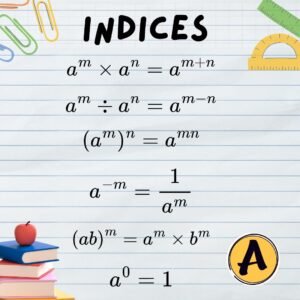
Indices laws formulae chart showing multiplication, division, powers and negative indices

Indices Laws Explained | Free Practice Questions & Tests

Indices (also called exponents or powers) might sound fancy, but they’re just a quick and clever way to show repeated multiplication. Instead of writing the same number over and over(2x2x2), indices help you keep things neat and easy(23).

Think of them as the “superpower” of numbers — once you understand them, a whole world of advanced math becomes much easier to conquer!

Read More »
Year 3 Maths NSW Syllabus graphic with maths book, numbers, symbols and geometry diagrams for primary students

Year 3 Maths NSW Syllabus 2026: Parent Guide

Understand the Year 3 Maths NSW Syllabus for 2026 with this clear parent guide. Learn the key Stage 2 maths topics, including place value, addition, subtraction, multiplication, division, fractions, measurement, time, 2D and 3D shapes, data, chance and Year 3 NAPLAN numeracy preparation.

Read More »
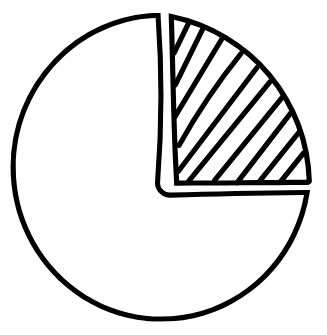
Math Geometry Pie
Math Symbols
Maths tutor helping a student with schoolwork during a one-on-one tutoring session

Not sure whether maths tutoring is right for your child?

Book a free initial maths assessment to discuss your child’s current level, learning gaps and suitable next steps.

Years 1–10 • NSW syllabus-aligned • Face-to-face and online tutoring